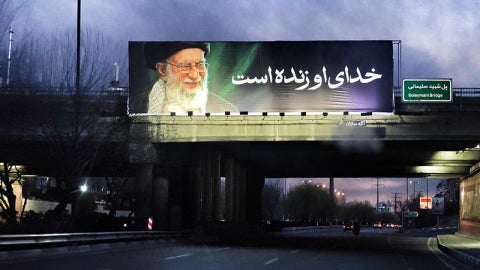
Iran Uprising: Unpacking US-Israeli Allegations Amidst a Divided Kurdish Front
The Middle East remains a geopolitical tinderbox, and few flashpoints command as much international attention as Iran. Recent allegations of US-Israeli designs for an Iranian uprising have ignited intense debate, not least within the complex tapestry of Kurdish politics. These purported strategies, aiming to catalyze regime change in Tehran, expose deep divisions among Kurdish groups and underscore the perilous tightrope walk between internal dissent and external intervention. The discussion surrounding israeli plans iran and their alleged American counterparts reveals a multi-layered approach to Iranian stability, with consequences reverberating far beyond its borders.
At the heart of these allegations lies a proposed future scenario, dubbed "Operation Roaring Lion," alongside more immediate responses to escalating regional tensions. Both frameworks suggest a strategic preference for externally-orchestrated pressure, potentially leveraging Iran's internal vulnerabilities, rather than solely relying on organic popular mobilization. This article delves into the specifics of these alleged strategies, the profound split within Kurdish movements, and the broader implications for regional sovereignty and stability.
"Operation Roaring Lion": A Glimpse into Alleged 2026 Israeli Plans for Iran
Reports of a meticulously planned "Operation Roaring Lion," purportedly slated for 2026, paint a vivid picture of a coordinated US-Israeli military campaign designed to dismantle the current Iranian regime. Unlike strategies focused purely on fostering internal dissent, this alleged blueprint centers on a significant external military intervention. Its primary objectives reportedly include:
- Degrading Iran's Military Capabilities: Targeted strikes aimed at neutralizing Iran's ballistic missile program and conventional armed forces, seen as a direct threat to regional stability and Israeli security.
- Disrupting Nuclear Infrastructure: Airstrikes and covert operations against key nuclear facilities, aiming to set back Iran's nuclear ambitions significantly.
- Decapitating Leadership: Operations designed to disrupt command and control structures, potentially targeting key figures, to create a power vacuum and sow chaos within the regime.
- Proxy Degradation: Strikes against Iranian-backed militias across the region, weakening Tehran's regional influence and deterrent posture.
The overarching goal, according to these allegations, is to create conditions ripe for internal regime collapse, transforming existing internal unrest into a full-blown uprising. This approach, favoring direct external pressure over purely organic movements, builds on decades of US-Israeli coordination against Iran. Historically, this has included sustained economic sanctions designed to isolate the regime and covert operations aimed at sabotaging its strategic capabilities, such as those targeting nuclear scientists and facilities. These cumulative efforts, though often incremental, have systematically sought to weaken Iran. The alleged 2026 plan, therefore, appears to be an escalation of these long-standing efforts, moving from attrition to a more decisive, externally-driven intervention. For a deeper dive into this specific alleged plan, read: Operation Roaring Lion: Inside Israel's Alleged 2026 Iran Plan.
A Divided Front: Kurdish Perspectives on External Intervention
The prospect of external intervention in Iran has dramatically exposed ideological fault lines within the broader Kurdish movement, particularly among groups affiliated with the PKK/KCK umbrella network. The internal debate highlights the perennial struggle between pursuing self-determination through indigenous means versus accepting strategic alliances that might expedite regime change, albeit with potential long-term costs to sovereignty.
The DEM Party's Stance: Rejecting Imperialism, Upholding Internal Will
Turkey's pro-Kurdish DEM Party has vehemently denounced alleged US-Israeli "designs" on Iran, framing them as imperialistic and counterproductive to genuine popular resistance. Their critique centers on the belief that any uprising against the Iranian government must be driven solely by the internal will of its people, free from foreign manipulation. The DEM Party argues that external intervention, including any purported Israeli ambitions for a Kurdish-led insurgency, risks:
- Undermining the legitimacy and organic nature of popular resistance movements.
- Escalating regional conflicts, potentially drawing the Kurdish regions into broader proxy wars.
- Compromising Kurdish autonomy struggles by aligning them with external agendas that may not ultimately serve Kurdish interests.
For the DEM Party, true change in Iran must emerge from within, ensuring that any new political order is a direct reflection of the Iranian people's desires, not the strategic calculus of foreign powers. This stance is deeply rooted in a history of skepticism towards external powers, often seen as having exploited Kurdish aspirations for their own geopolitical ends.
PJAK's Pragmatic View: Alliance as a Necessary Evil
In stark contrast, Iran's PJAK (Party of Free Life of Kurdistan), while ideologically linked to the KCK structures, has indicated a more pragmatic stance. PJAK commander Peyman Vian suggested that collaboration with external actors, including Israel, might be a necessary evil to achieve freedom and topple the current regime. This perspective is shaped by:
- Military Realities: Acknowledging the formidable military might of the Iranian state, PJAK may view external alliances as crucial for acquiring the resources, intelligence, and military support required to challenge the regime effectively.
- Urgency of Freedom: For groups facing direct oppression, the prospect of an expedited path to liberation, even if it involves controversial alliances, can outweigh concerns about ideological purity or long-term risks.
- Shared Adversaries: The perception of common enemies can forge unusual alliances, where a strategic partnership with Israel, despite ideological differences, is seen as a means to a shared immediate goal.
This deep divide within the Kurdish movement highlights the profound dilemmas faced by stateless nations operating in complex geopolitical landscapes. While both sides ostensibly seek self-determination and freedom, their divergent strategies underscore the "perils of proxy dynamics" and the constant negotiation between principle and pragmatism in the pursuit of revolutionary goals.
Recent Leaks and Immediate Tensions: Israel's Retaliation & US Assessment
Beyond the alleged 2026 plan, the immediate geopolitical climate is fraught with tension, exacerbated by recent intelligence leaks. Highly classified documents, purportedly a US assessment of Israeli plans to attack Iran, surfaced on Telegram, sparking investigations by US authorities into the breach. These documents, based on satellite imagery and other intelligence, detailed alleged israeli plans iran was facing in the immediate term.
The timing of these leaks is critical, coming just weeks after Israel vowed a strong retaliation for Iran's massed ballistic missile attack. That Iranian attack, in turn, was presented as a response to Israel's alleged assassination of Hezbollah leader Hassan Nasrallah. This volatile tit-for-tat dynamic underscores the fragility of regional stability. Military analysts have lent credibility to the phrasing in the leaked documents, suggesting they reflect genuine intelligence assessments. The White House National Security Council spokesman, John Kirby, confirmed investigations were underway to determine the source of the leak—whether a hack or an insider—stressing the gravity of such disclosures. For a comprehensive look at these recent revelations, see: Leaked US Assessment: Israel's Immediate Iran Attack Plans.
These leaks not only expose potential strategic thinking but also complicate diplomatic efforts, fueling suspicion and increasing the risk of miscalculation. The unauthorized release of such sensitive information can undermine trust between allies and embolden adversaries, making an already tense situation even more precarious.
The Geopolitical Chessboard: Risks, Rewards, and the Future of Iran
The alleged US-Israeli strategies concerning Iran, whether the long-term "Operation Roaring Lion" or more immediate retaliatory measures, are fraught with immense risks and uncertain rewards. The belief that external intervention can cleanly trigger regime change often overlooks the complexities of internal politics, the resilience of authoritarian states, and the unpredictable nature of regional responses.
- Regional Escalation: A direct military confrontation or even a covertly supported insurgency could quickly spiral into a broader regional conflict, drawing in other state and non-state actors.
- Humanitarian Cost: Any large-scale conflict or internal destabilization would inevitably lead to significant civilian casualties and a humanitarian crisis.
- Unintended Consequences: The outcome of externally engineered regime change is rarely predictable. The replacement regime might prove equally hostile, more radical, or lead to protracted civil strife, as seen in other Middle Eastern interventions.
- Sovereignty and Self-Determination: The debate within the Kurdish movement highlights a fundamental question: at what cost is "freedom" achieved? Does external intervention truly lead to self-determination, or merely replace one form of foreign influence with another?
The enduring challenge for policymakers is to find a balance between containing perceived threats from Iran and avoiding actions that could plunge the region into deeper turmoil. The complexities of internal dissent, the varied aspirations of diverse ethnic groups like the Kurds, and the historical mistrust of foreign intervention make any external strategy incredibly delicate.
The unfolding narrative surrounding alleged israeli plans iran and US support reveals a high-stakes geopolitical drama. From long-term strategies like "Operation Roaring Lion" to immediate retaliatory considerations, the preference for external pressure is evident. Yet, the profound split within the Kurdish movement and the inherent risks of such interventions serve as stark reminders of the intricate and often unpredictable nature of Middle Eastern politics. The future of Iran, and indeed the broader region, hinges on these delicate balances, with sovereignty, self-determination, and the looming specter of escalation at the forefront of global concerns.